

- By Ali Greplova
- 1. 2. 2026
- Africa
Self-drive safari sounds like the ultimate adventure. Freedom, open roads, wild nature on your own terms. And for some people, it genuinely is.
But after thirty years in Africa, I’ve seen the same thing happen again and again. And I want to be honest about it.
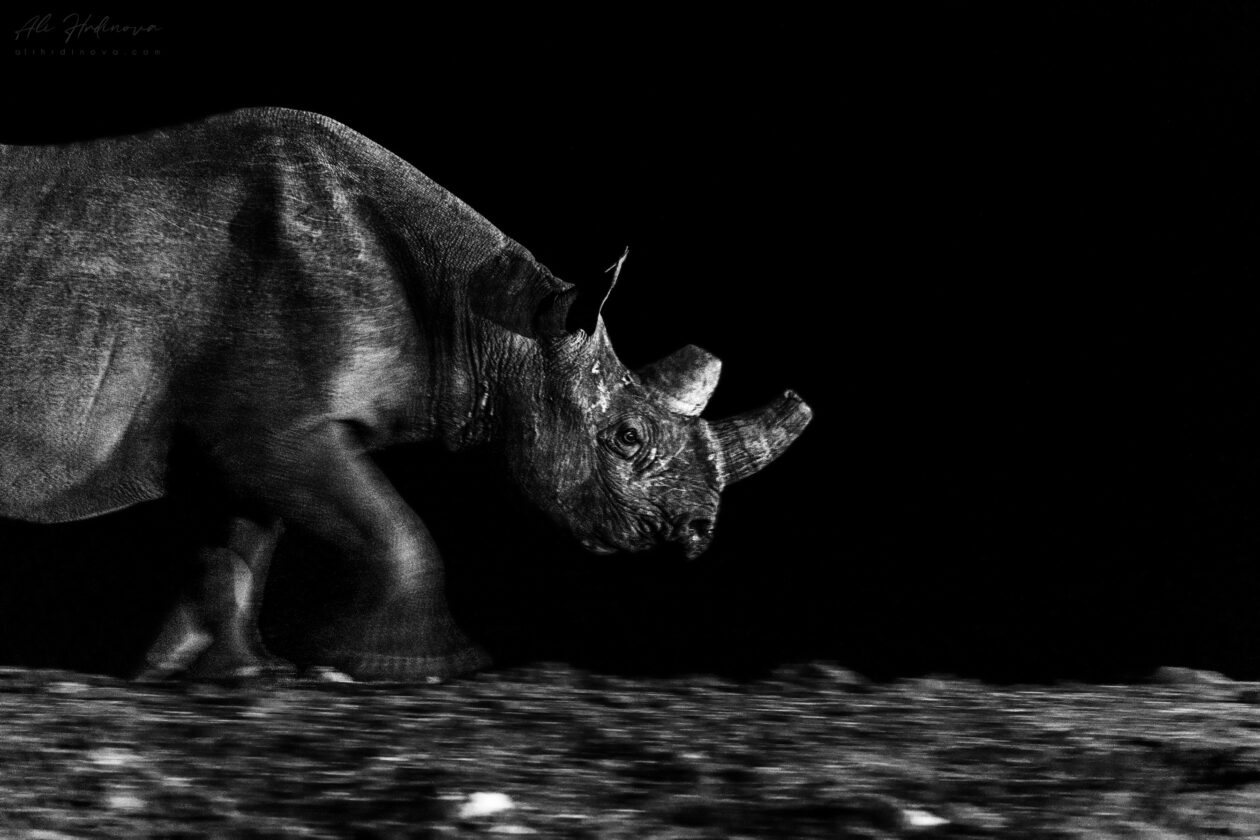
Etosha, 10:45 pm
Halali waterhole. We’re sitting in the dark. There’s one hyena — a local, we’d been seeing her all week, almost like an old acquaintance at this point — and a handful of birds. Nothing else.
The group around us starts shifting. Quiet sighs. Checking phones. No elephants. No rhinos. Maybe tomorrow. One by one, they get up and leave.
We stay.
A few minutes after the last car left, the rhino mothers arrived. Three of them, each with a calf. And behind them — a whole herd of elephants. One of the bulls was in musth, clearly trying his luck with every female in sight.
The people who left missed all of it. Not because they were unlucky. Because waiting in Africa feels like failure when you don’t know what you’re waiting for.
A kingfisher outside a burrow
Different country, different year. We got word that the first young common kingfisher had appeared at a nest burrow. My friend Aleš and I jumped in the car, drove straight there, crammed ourselves into a hide. Two people, barely room to move.
Three hours. Nothing flew. Then his phone rang — his wife, something about the garden, could he come help.
I told him: Aleš, wait ten minutes. You know how this works.
He said he had to go. Packed up, drove away.
Ten minutes later, three young kingfishers flew from the burrow in succession. Then the parents arrived and mated — already preparing the next clutch.
He missed it by ten minutes.
Africa works the same way. The moment you stop waiting is usually the moment everything happens.
So is self-drive a bad idea?
No. For certain travelers, it’s the right choice. The freedom is real.
But there’s something worth understanding before you go: the most powerful moments in Africa are almost never the ones you find. They’re the ones you stay for.
Knowing where to wait. Knowing how long. Reading a shift in the wind, a silence in the bush, a tension in an animal’s posture before anything visible happens — that’s not instinct. It’s thirty years of paying attention.
That’s the difference between seeing Africa and experiencing it.
It’s not about comfort. It’s not about what’s included in the price. It’s about what you don’t miss.
Curious what that kind of journey looks like? Apply here.