


- By Ali Greplova
- 6. 5. 2026
- Africa
She was born in Silesia on 20 January 1910 as Friederike Victoria Gessner. Father Viktor, architect. Mother Traute.
She died in Kenya on 3 January 1980. And in between, she changed the way the world thinks about wild animals. She laid and built the foundations of wildlife conservation.
She came into the world at a time when colonial hunting was at its peak. The strongest, the most beautiful, the rarest were shot. For fun. For a trophy. For a head on a wall.
Joy went the other way. Nobody raised her to do it. She carved that path herself.
.

From Opava to Africa
She was born in Opava. Her parents divorced when she was young — at a time when divorce was socially almost unthinkable. She grew up with her grandmother in Kružberk. About her, she later wrote just one sentence that says everything: “It is to her I owe anything that may be good in me.”
She was taken to Africa by her first husband, Viktor von Klarwill. A Jew. Like many others, they fled the rising tide of Nazism. He sent her ahead — he followed later.
She left in 1937 — whether with a Czechoslovak or Austrian passport, we do not know, history did not record it. But her true belonging was elsewhere. In the African wilderness.
On the ship she met Swiss botanist Peter Bally. Joy was not one for convention — she divorced and remarried.
With Bally she travelled Kenya from end to end. She painted plants, tribes, landscapes. Hundreds of paintings. Kenya consumed her. Animals more than people.
Then she met George Adamson. A game warden — in colonial Kenya that meant riding alone across hundreds of miles of wilderness, making life and death decisions about animals. No laws, no safety net.
She married for the third time.
George was her complete opposite — calm and measured. Where Joy stormed with emotion, George offered patience. Yet — or perhaps because of this — together they achieved something no one before them had done.
Elsa
In 1956 George shot a lioness that attacked him. Only then did he understand why. She was defending her cubs.
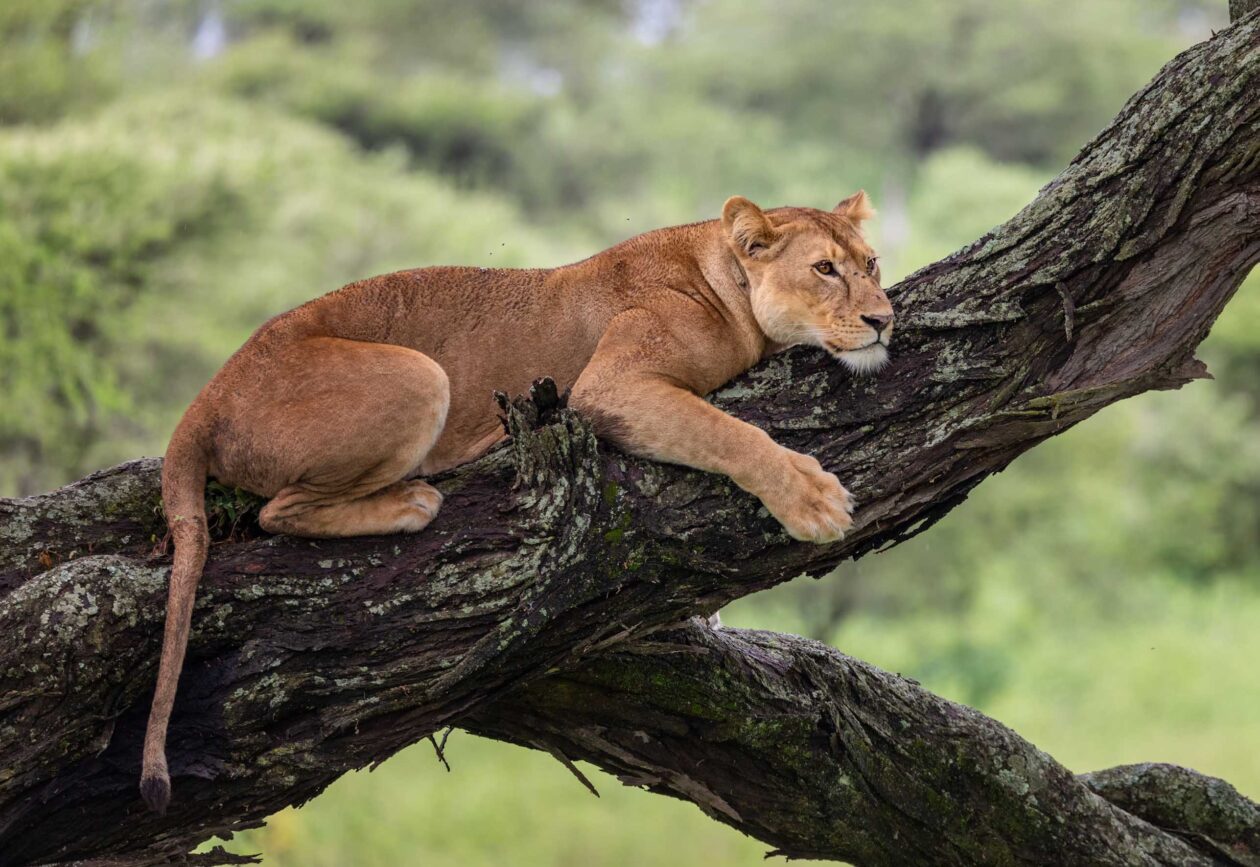
Three blind cubs. Joy hand-raised all three — baby bottles, goat’s milk, day after day. She became their adoptive mother. The two stronger ones she sent with a heavy heart to Rotterdam Zoo — chosen for its reputation for humane treatment. The smallest one stayed.
Elsa.
As Elsa grew, the authorities decided — an adult lioness cannot remain in a camp.
A zoo? Never.
An enormous challenge. But everything happens for the first time once.
Months of training. Teaching a lioness who had never hunted to hunt. Teaching her to behave instinctively in an environment she had never known. Teaching her to be a lioness again, not a house pet.
Elsa returned to the wild. The first lioness in history successfully released back. Three years later she came to show her own cubs.
Born Free
Joy wrote a book about Elsa. Born Free. 1960. Thirteen weeks at the top of the New York Times bestseller list. Thirty-five languages. Two Oscars for the film.
In 1966 the film was made. Joy and George were played by the real-life married couple Virginia McKenna and Bill Travers. Elsa’s story moved them both deeply — as it later moved the whole world. They remained friends with the Adamsons. And together they founded the Born Free Foundation — a charity protecting wild animals and their natural habitat, which continues its work to this day.
Elsa died of natural causes in January 1961. She is buried in Meru.
Nineteen years later, Joy’s ashes were scattered on her grave.
Shadows
Thanks to Elsa, the world began to see wild animals differently.
Joy Adamson was not a simple person. She was explosive, demanding, sometimes unbearable. She shouted at her staff, she could be hard. Yet her love for the wild changed the world.
Virginia McKenna said of her: “She was passionate, sometimes unreasonable and volatile. But her financial generosity saved three national parks.”
On 3 January 1980 she was found dead near her camp in Shaba Game Reserve. At first a lion attack was suspected. It turned out to be murder. Her former employee Paul Nakware Ekai was convicted, later retracted part of his statement. The truth remained in the African bush.
George survived Joy by nine years. He too died a violent death — trying to save a tourist who had been attacked. His story deserves its own article.
Joy
From Opava to the African bush. A profound transformation. From a girl who shot a deer as a teenager and swore never again — to a woman who changed the way the world thinks about wild animals.
She was not simple. Far from it. Very complicated. Not a saint. But what she left behind endures to this day.
It started with Elsa. Then came Pippa the cheetah. Penny the leopard.
Her Born Free Foundation continues its work today. The royalties from her books and films helped create five Kenyan national parks — Meru, Samburu, Shaba, Kora and Hell’s Gate. And the methods she developed with George for returning animals to the wild are now the global standard.
